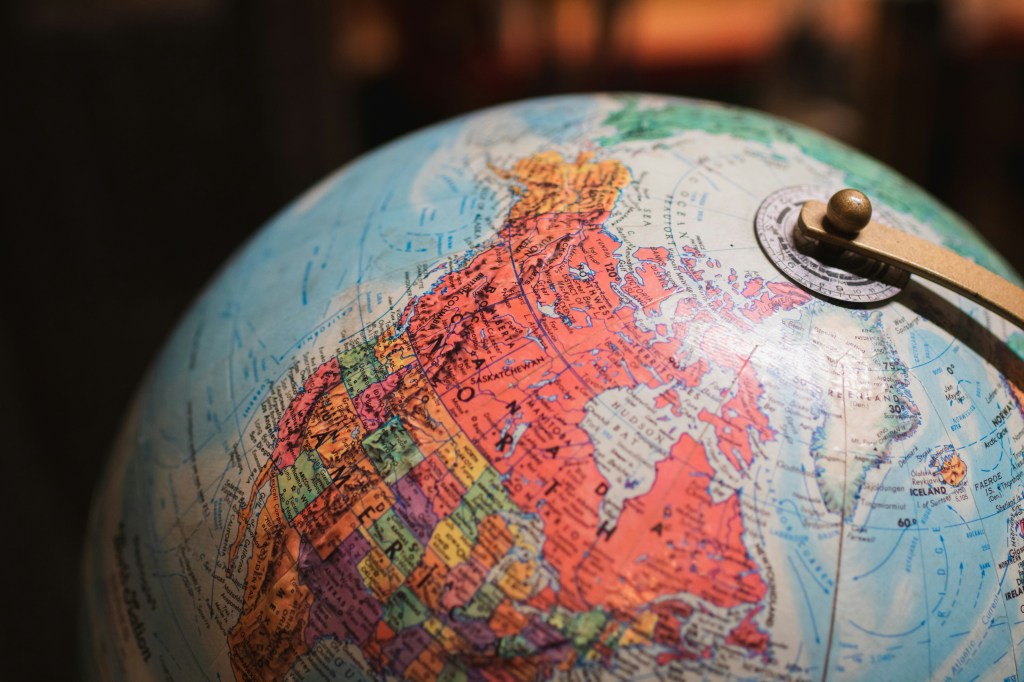
2026 started with a shock, with America disregarding international law and established diplomatic behaviour to invade Venezuela. Yes, the former president was undoubtedly a brutal dictator. However, it is the brazen US view that they can do whatever they want that is a major problem to the world order. What if? Trump’s threats to invade Greenland in 30 days have sent shock waves around Europe. Latin America is preparing to fight the US if it invades Mexico, Cuba and Colombia, as the US national strategy suggests. The US are openly supporting extreme right-wing political parties in Europe and the UK to destabilise the bloc. The word for 2026 is ‘spheres of influence’. We will hear this frequently. Trump says that the western hemisphere is the US sphere of influence, Eurasia is the Russian sphere of influence (note, not the EU in Trump’s autocratic playbook), and the rest of the world is basically China’s sphere of influence (undoubtedly it will use the opportunity to invade Taiwan). All of this may lead to sanctions, a trade war and shortages of components. 2026 may mark the end of NATO as a result of the invasions. That instability might embolden Russia to use nuclear missiles in Ukraine to achieve what its conventional warfare has not managed to do.
If I wrote this a year ago, I would have been written off as a fantasist. It really is a potential worst-case scenario for 2026. What might this all mean for public relations and communications? Aside from big PR agencies mounting PR campaigns for states seeking attention in the new world order, I would like to focus on everyday things. The internet, social media, and the equipment we need to use this vital PR channel. Practically all of these are owned by US companies, with only a few owned by Chinese companies. Russia, mentioned earlier, isn’t in the picture, and I’m not surprised. They are a country that shouts loudly but is pretty incompetent. But the US….
Most major IT companies in America support Trump and make personal donations to him. It is an American ideal to make loads of money, and supporting a rogue president is fine so long as the cash registers keep dinging. Let us examine the picture from a more ethical European and UK perspective.
Most organisations rely on Microsoft products for basic computing needs. Microsoft donated to Trump.
Many organisations rely on Amazon for its internet services, and many individuals use Amazon for regular shopping. They donate to Trump.
LinkedIn is owned by Microsoft. Meta – Facebook, Instagram, WhatsApp – donate to Trump. X – whatever the fallout between Musk and Trump – are still massive supporters of Trump. Google, and therefore also YouTube, support Trump. Even alternative social media like Bluesky is American. The software you use, such as Adobe, MailChimp, and SurveyMonkey, is all American. As is one of the biggest website hosts, WordPress. Book a taxi with Uber – they donate to Trump.
In AI, nearly all the major players are American and support Trump, such as OpenAI (ChatGPT), – a major donor. Yes, there are Chinese and very small European AI companies, but they are so insignificant.
Nvidia is a Trump supporter. Apple supports Trump with donations, regardless of what they may market as their ‘global view’. Their CEO often dines with Trump. On the other side, many of the equipment manufacturers are Chinese. In a sphere of influence new world, you are no better off looking there. TikTok is a Chinese company and has been banned for use by UK government departments, except for the Prime Minister, who needs to compete with Farage.
Since their early days, I have used Proton for my personal email, digital vault, password protector and VPN. They are Swiss and highly privacy-focused. A good option if you want to leave Gmail or Yahoo. Also consider Samsung (South Korean) and Japanese companies such as NEC. The Swiss company Punkt is about to launch a privacy-focused smartphone.
My research suggested that, apart from the openly Trump-supporting companies listed above, smaller US ones may or may not be supporting Trump. It depends on whether they have declared this. My research showed that no European or UK IT companies openly supported Trump, whereas their British and European bankers did.
In a worst-case scenario, where the US is regarded as an enemy of Europe, how will this affect PR in the UK and Europe? The main motivator for US firms is making lots of money, so they will want to continue to sell products and services to us while harvesting our data, although tariffs and trade wars will make their products more expensive. For most UK organisations, there is no viable alternative to relying on US IT companies and their undemocratic principles in pursuit of profit. However, conduct horizon scanning and sense-making. Be aware of global developments and plan for best-, likely, and worst-case scenarios. As the UK rail companies love to say: “See it. Say it. Sorted”.
[Image of a globe by Greg Rosenke on Unsplash]



 Bite Size Comms
Leave a comment