Let’s talk about communicating climate change, the topic of an excellent CIPR International webinar this week. First, let’s look at the challenges of communicating climate change (and sustainability, ESG, and any other term you prefer). The language originates from scientific terminology and was hard fought to establish. It is also terminology widely used by the UN and funding agencies, who expect recipients of project funding to use it. Additionally, it is terminology from the Global North imposed on the Global South. The main issue is that people who aren’t deeply involved in climate change science simply don’t understand what is being said. So how can we persuade people to make lifestyle changes that reduce their negative impact on our planet, or to pressure democratic governments to do the same? How can we foster community, build momentum and change hearts, minds and behaviours about this global issue? The answer is that we need to become better communicators! As PR/communications practitioners, it is our responsibility to communicate clearly, inclusively, and accessibly.
So, if it helps, here is my list of climate change terminology, together with simple explanations that we might use instead. A work in progress, as they say.
- Adaptation: actions that help people, places, and economies cope with the effects of climate change.
- Blue economy: using oceans, rivers, and coasts in ways that protect their health while supporting jobs and growth.
- Carbon capture: trapping carbon dioxide before it escapes into the air, usually from factories or power plants.
- Carbon footprint: the total amount of carbon emissions caused directly or indirectly by a person, organisation, or product.
- Carbon neutral: balancing the amount of carbon released with an equal amount removed or avoided.
- Carbon offsetting: funding projects that cut or absorb carbon elsewhere to make up for your own emissions.
- Carbon removal: taking greenhouse gases out of the atmosphere, either naturally or with technology.
- Carbon sink: something, like a forest, ocean, or wetland, that absorbs more carbon dioxide than it releases.
- Climate change: long-term shifts in weather patterns and temperatures across the planet.
- Decarbonisation: cutting down the amount of greenhouse gases we produce from energy, transport, and industry.
- Global warming: the steady rise in the Earth’s average temperature caused by greenhouse gases.
- Greenhouse gases: gases such as carbon dioxide and methane that trap heat in the atmosphere.
- Greenwashing: making misleading claims about how environmentally friendly a company or product is.
- Mitigation: actions taken to slow down or prevent further climate change.
- Net zero: achieving a balance between the greenhouse gases added to and removed from the atmosphere.
- Renewable energy: energy from sources that naturally replenish, such as the sun, wind, and water.
- Resilience: the ability of people and communities to prepare for, withstand, and recover from climate impacts.
- Rewilding: helping damaged ecosystems return to their natural state by restoring wildlife and habitats.
- Structural economic change: a shift in how an economy works, such as moving from high-carbon to low-carbon industries.
- Tipping point: the moment when climate change becomes self-reinforcing and difficult to reverse.
- Transition: the shift from fossil fuels and unsustainable practices to cleaner, greener ways of living and working.
We also need to frame our messaging better by moving beyond diagnosing the challenges to suggesting how to act. We need to communicate in a way that motivates people to action: “Here is what you can do about it”. We should avoid emotional terms like ‘catastrophic’ or ‘unprecedented’. So full of doom and gloom!
We should also aim to diversify the voices discussing climate change. In many countries, faith-based communities are the most trusted source. Can we assist faith leaders in framing climate change as a moral issue?
More than anything, our climate change communication should shift from abstract, science-based messages about global warming in 25 years’ time to something that connects with audiences and sparks empathy. My PR apprentices say that Cambridge Marketing College’s Get Carbon Literate: Understanding and Communicating Climate Change and Sustainability one-day online course for marketers and communicators really helps. Check it out if you want to improve your climate change communication. Another useful resource is the Climate Communications Alliance. Join as a free member of this global community of climate change communicators.
Disclosure: I am a PR tutor for Cambridge Marketing College, and a member of the Climate Communications Alliance.
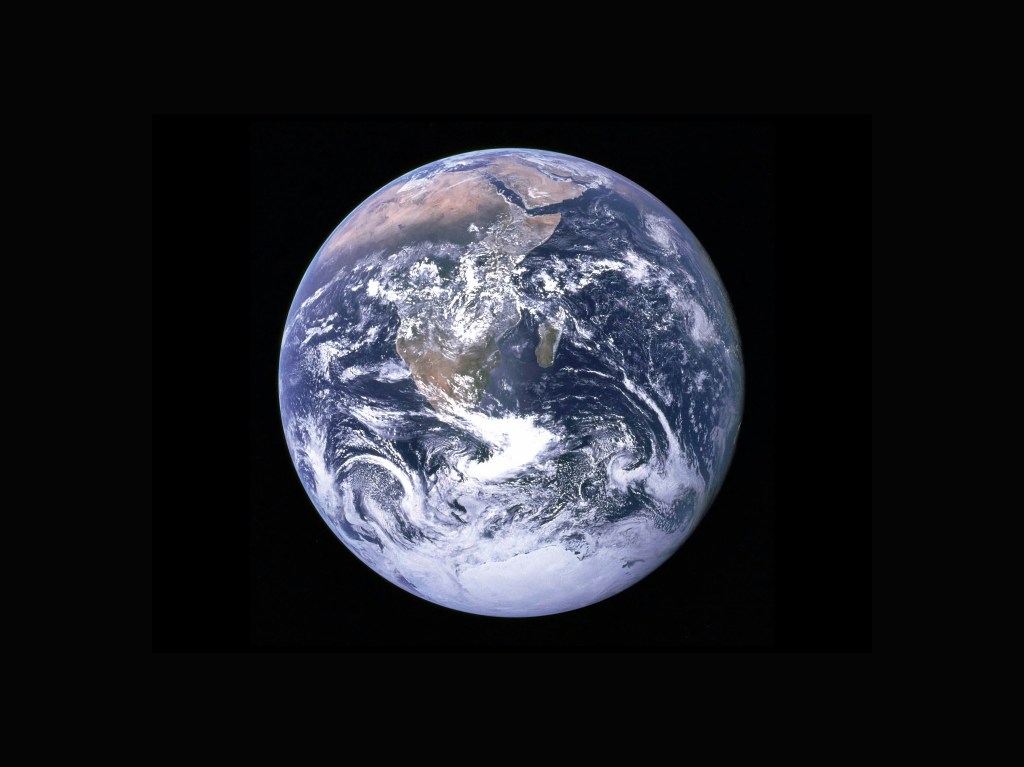
[Image of the planet Earth by NASA on Unsplash]


 Bite Size Comms
Leave a comment