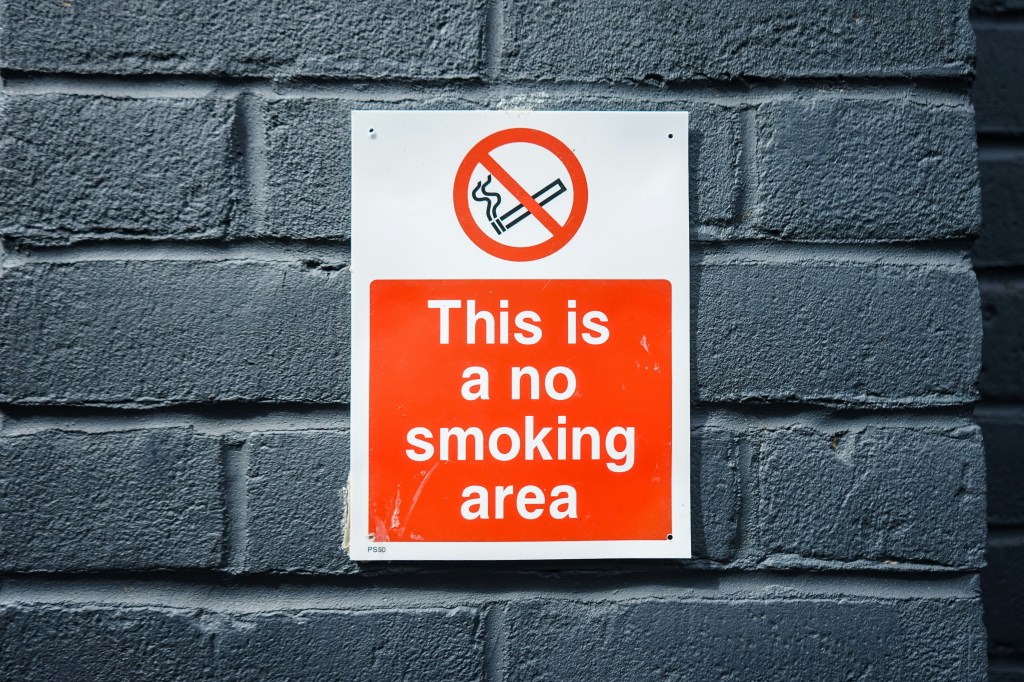
An interesting article by James Marriott in The Times prompted my thinking. Can we compare the current situation of social media use, following the recent landmark ruling against Meta and Google in the US, with smoking in 2006, when it became socially unacceptable after bans on indoor smoking in public places? And if so, how can ethical communicators use behaviour change communications to complement laws that have been, or may soon be, enacted against social media platforms, in order to win people’s hearts and minds? In 2006-7, it wasn’t just the law and threat of legal action, but also the erosion of social status by forcing smokers to ostracise themselves from colleagues or friends to smoke. Can similar social measures restrict people’s use of social media?
The legal landscape has shifted significantly. On 26 March 2026, a Los Angeles jury found Meta and Google liable for designing platforms that fostered a young woman’s social media addiction and caused enduring mental health damage. Jonathan Haidt, psychologist and author of The Anxious Generation, stated plainly: “They will be treated like any industry that knowingly harms children and lies about it. History will judge them as harshly as the tobacco industry.”
This verdict is not isolated. A separate New Mexico jury ordered Meta to pay $375 million for misleading consumers about the safety of its platforms. Thousands of similar cases are pending in federal and state courts. Meanwhile, the UK’s Online Safety Act, which received Royal Assent in 2023, now imposes a legal duty on platforms to protect children, with Ofcom empowered to issue fines of up to £18 million or 10% of global revenues for non-compliance. The UK government is also actively consulting on banning social media access for under-16s and restricting addictive design features such as infinite scrolling, with plans to legislate within months.
The law is progressing. But as anyone with experience in behaviour change communications understands, legislation alone is seldom enough. The smoking precedent explains why and indicates what will follow.
The Health Act 2006 introduced the ban on smoking in enclosed public places. However, the legislation was successful not just because it was law; it also coincided with and boosted a longer-standing cultural shift. In 1979, 45% of the UK population smoked. By the 1990s, that number had decreased to 30%, and between the introduction of the ban in 2007 and 2010, it further dropped by a further 9%. The ban, as Marriott noted in The Times, nudged smokers toward the “periphery of their social networks.” Being asked to stand outside in the rain became a strong daily reminder that smoking was no longer the social accessory it once was. In fact, a successful NHS anti-smoking campaign exploited that situation.
Public health researchers refer to this approach as denormalisation. Denormalisation strategies seek to make a behaviour less visible and less socially acceptable, reducing its appeal and garnering public support for further regulation. Importantly, post-2007 research showed that the ban largely relied on self-policing, as one analysis noted, because the reasons for the regulations were well-understood and the benefits were clear. A Smoking-Related Behaviour and Attitudes Survey for 2008/09 revealed that 93% of adults in Great Britain backed restrictions on smoking in restaurants and 94% in other public places. The social consensus was strong.
Tobacco denormalisation campaigns, including the notable Truth® initiative in the United States, went further: they exposed manufacturers as manipulative and dishonest, challenged smoking as a symbol of independence, and successfully positioned smoke-free behaviour as normative. The lesson for communicators is that the target of stigma matters. Campaigns that focus on the corporations and their design choices, rather than shaming individual users, tend to be more ethically sound and more effective.
For UK PR and communications practitioners, particularly those working in the public sector, this is not just a theoretical exercise. It is a live brief. Here is how behaviour change frameworks can be applied:
1. Make the invisible harm visible. The smoking ban succeeded partly because secondhand smoke became an accepted, tangible harm that non-smokers could easily recognise. The harms of excessive social media use: anxiety, depression, loss of concentration, disrupted sleep, are less visible, more personalised, and easier to dismiss. Communication campaigns need to make these harms concrete and relatable, drawing on emerging clinical evidence and real personal testimony rather than abstract statistics.
2. Leverage Cialdini’s principle of social proof. The PRCA has emphasised social proof — “we follow the behaviour of others who we perceive as similar to us” — as one of the most effective tools in behaviour change communications. If parents, teachers, employers, and public figures visibly and publicly limit their social media use, or celebrate doing so, this creates a normative environment where excessive use begins to feel socially awkward rather than socially expected. This is exactly how the “standing outside to smoke” dynamic unfolded.
3. Distinguish between denormalising the platform and stigmatising the user. Academic research into anti-smoking communications has demonstrated that empathetic approaches, which focus blame on the tobacco industry’s manipulative practices rather than on smokers themselves, are more effective in persuading and are less likely to strengthen resistance. The same principle applies here. The legal cases against Meta and Google revolve around design choices: infinite scroll, algorithmic amplification, addictive product engineering, rather than users’ moral failings. Ethical communications should adopt this framing.
4. Use injunctive and descriptive norms. Research into digital nudges for social media overuse has demonstrated that norm-based interventions can change behaviour, making people aware of what is commonly deemed healthy use (descriptive norms) and what is socially approved (injunctive norms). Campaigns that state “most parents are now choosing phone-free family dinners” are more effective than those that simply issue warnings.
5. Building coalitions across sectors. The smoking ban succeeded because it was not just a government effort: it was supported by health professionals, employers, hospitality venues, and ultimately the public. A similar coalition, including child safety charities, mental health professionals, employers, schools, and the PR industry itself, is needed to promote a shift in social norms on social media. The CIPR and PRCA’s codes of conduct already require members to promote accuracy, transparency, and ethical engagement. There is a leadership role here for the profession, including the professional bodies, CIPR and PRCA.
The comparison is instructive but not perfect, and intellectual honesty requires recognising where it falls short. Smoking involved a clear, measurable physical harm to third parties — secondhand smoke — which made regulation much easier to justify and enforce. Social media harm is real, but it is also more complex, more contested, and more deeply embedded in how people connect, work, and communicate. As one academic review in Nature noted, the evidence linking screen time to teen mental illness, while concerning, is not yet as causally definitive as the evidence that linked tobacco to cancer.
Furthermore, there is a significant ethical risk in the denormalisation approach: it can lead to stigmatising vulnerable individuals instead of the systems that target them. The communicator’s responsibility, which aligns with the CIPR’s code, is to ensure campaigns focus on platforms and their design choices, rather than shaming those who are often victims of intentionally addictive architecture.
What the historic verdicts against Meta and Google have done is create a moment. Legal accountability, regulatory pressure, and a growing cultural unease are converging, much as they did in the mid-2000s around smoking. The ban on indoor smoking did not cause the culture change; it crystallised it, accelerated it, and gave social disapproval a formal backing that made it stick.
PR and communications practitioners are not regulators. However, we are, by training and professional obligation, architects of meaning and social norms. The question Marriott raises: Can stigma do what bans cannot? — is, essentially, a behaviour change brief. And it is one that our profession is uniquely equipped to answer.
[Image of a no-smoking sign against a brick wall from Unsplash+]


 Bite Size Comms
Leave a comment