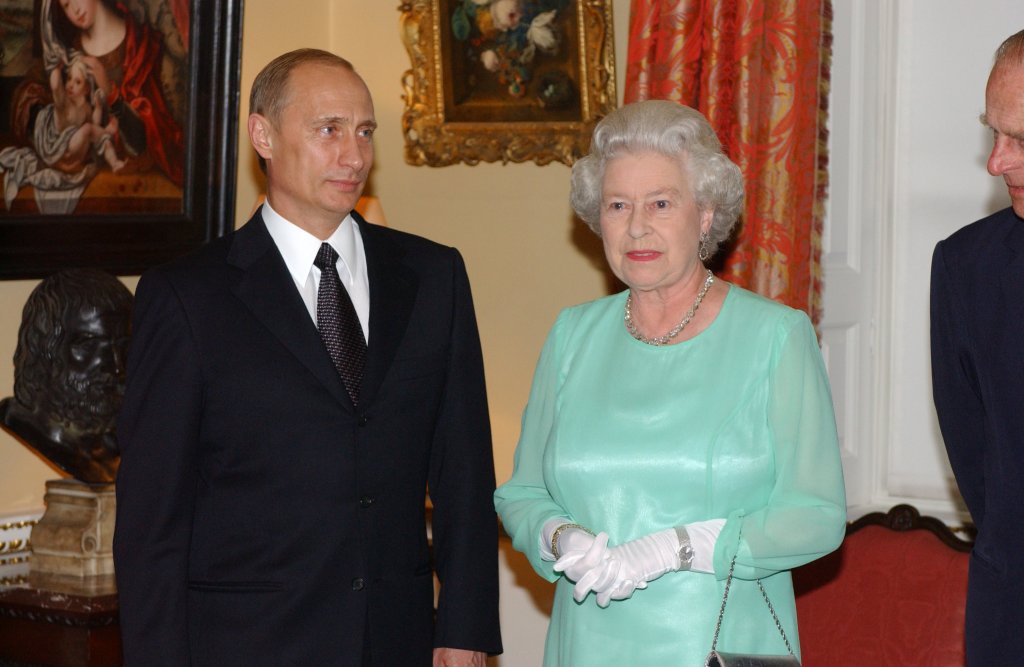
After finishing work on Friday, I decided to post something on LinkedIn. It was a story that had caught my attention, and I thought it might interest my friends over the weekend. The story dates back to 2003 and the Russian state visit to the UK. When President Putin met Her Majesty, the blind home secretary David Blunkett’s guide dog started barking without stopping. Mr Blunkett apologised, but Her Majesty played down the incident with a sharp comment, “Dogs have interesting instincts, don’t they?” I added a photo from the state visit on Wikimedia Commons (a great Creative Commons site for images) to add an extra layer to the story and attract attention.
I teach my PR apprentices a mantra for the communications they create: purpose – audience – content. In that order.
- The purpose of this example was purely to entertain my friends on LinkedIn, in a kind of intelligent way. I was not seeking any business advancement from it. It also fitted my beliefs, as I detest Mr Putin and his Russian government (not, please note, Russians. Most of my neighbours are ethnic Russians or Belarusians).
- My audience was my friends who use LinkedIn, mostly PR/comms people.
- The content seemed to align with what I have observed and measured about how LinkedIn’s algorithm works today. It favours short, snappy posts with a visual. It dislikes long-form thought leadership, like this article. I kept the text snappy, with minimal commentary. The image added meaning. The post took me 15 minutes to create. That’s a lot less than the average three hours it takes to research and write my weekly articles.
I also teach my apprentices to use the TRUTH content model, devised by my friend Caroline Black. Originally a test for press releases to assess newsworthiness, I use it for all content. My TRUTH analysis of the viral post:
T = Topical or Timely. It would have been HM Queen Elizabeth II’s centenary around the time of posting, and the media and public were reflecting on her reign.
R = Relevant. It was an interesting historical anecdote that I thought would resonate with my friends on LinkedIn.
U = Unique or Unusual. The story was that, and who doesn’t like a story involving a dog or a cat?
T = Tragedy, Tension or Triumph. A bit of tension in the story!
H = Humans. The story was about two heads of state, one minister, and, of course, one dog. A good quote, too!
Many knowledgeable people say that one shouldn’t post on LinkedIn over the weekend. They are probably right for business-to-business or sales/marketing posts. This wasn’t that, and people do check their LinkedIn feed over a weekend, especially for non-business posts. My post started off slowly, until the first few reactions and a comment or two. Then it picked up. The algo appeared to be sending my post all over the world, judging by the names of people reacting to it. It reached 49,113 impressions, 198 reactions and 27 comments after four days.
What may be the learning from this?
- The Purpose – Audience – Content mantra and the TRUTH content model are important considerations when publishing content.
- You can post content at weekends if it suits what your audience would appreciate at that time.
- Short, snappy posts with visuals work well on LinkedIn in 2026. Long-form thought leadership articles no longer do.
- Work the algo. I liked every comment that wasn’t rude and responded to most of them. It helps get the algo moving!
- Sometimes it is just luck. Celebrate when you create a viral post. Don’t give up if it bombs. Mine often do!
[Image of President Putin, HM Queen Elizabeth II and the Duke of Edinburgh during the state visit, by kremlin.ru, CC BY 4.0, via Wikimedia Commons]





Leave a Reply